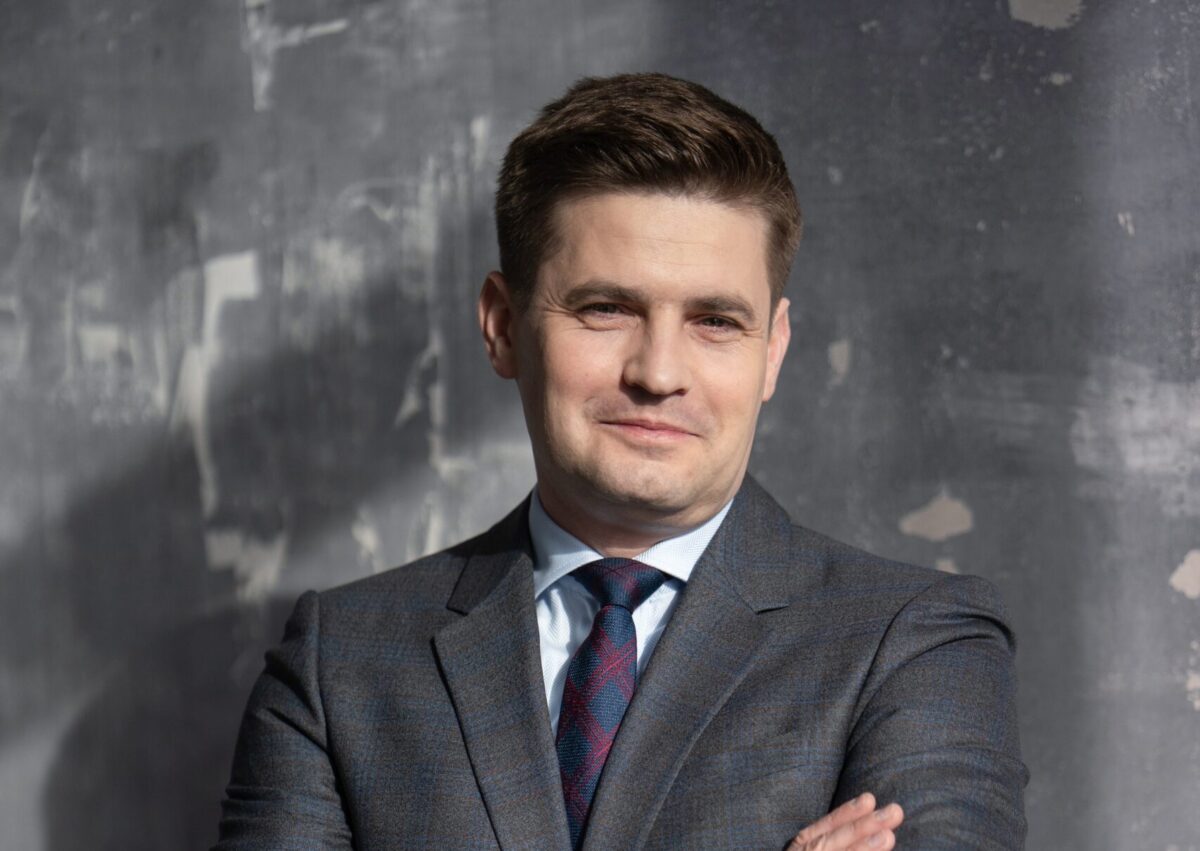
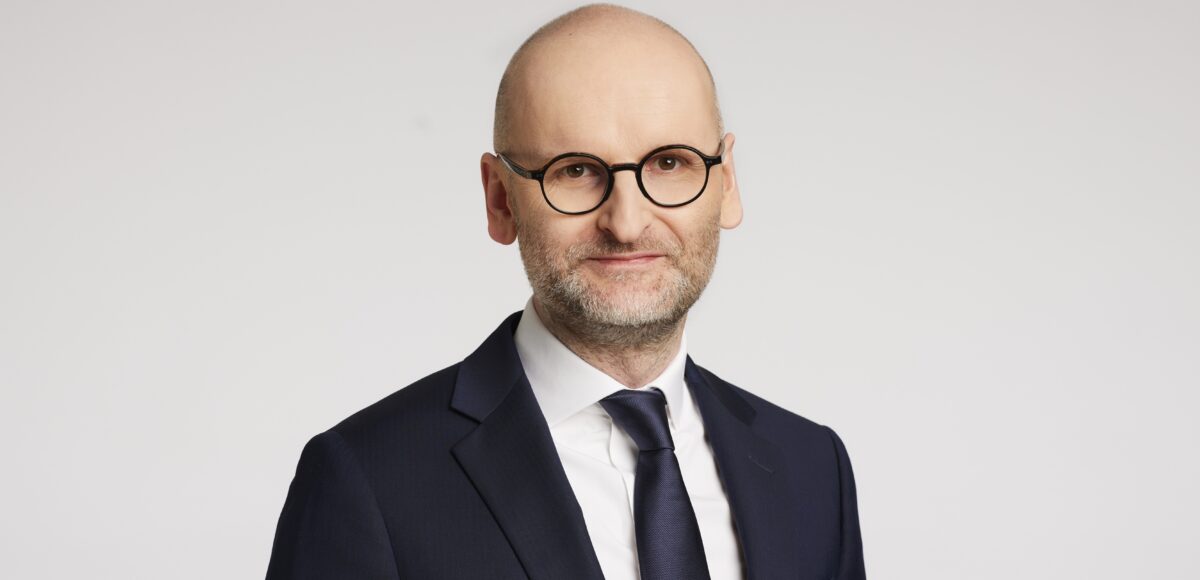

[WERSJA POLSKOJĘZYCZNA NA DOLE STRONY] Pinsent Masons has launched in Poland with a team of more than 40 people, built around lawyers known for advising on major real estate transactions, investment projects, financing, M&A, construction and infrastructure. Property Insider talks to Bartłomiej Kordeczka, co-managing partner of the firm’s Warsaw office, about why Poland matters to a global law firm, how legal support for major investment projects is changing, and why technology may reshape the way law firms deliver their services.
Property Insider: Pinsent Masons has launched in Poland with a sizeable team. From the perspective of real estate clients, is this a new law firm, or rather a new platform for people the market already knows?
Bartłomiej Kordeczka: It is clearly the latter. We are opening an office under a new global brand, but we are not starting from scratch in terms of credibility. The team is made up of lawyers who have spent many years working on major transactions, investment projects, financing, construction, M&A and cross-border matters. Clients know how we work, they know the projects we have advised on, and they know how we run processes. What is new is the scale and the model.
This is not one partner moving to Pinsent Masons with a team. We have built a structure made up of people who previously worked at several different law firms, who bring their own relationships, experience and specialisations, but who have come together around a shared view of how a legal practice should operate. That matters because clients no longer buy specialisation alone. They buy the ability to efficiently bring complex projects to completion – projects involving real estate, financing, corporate matters, construction, regulations and, often, international issues.
What was the core of that idea?
We wanted to create a team that works together, not merely alongside one another. In many law firms, the model is highly individualised: a partner has their own clients, their own book of business, their own relationships and, naturally, protects their own area. We wanted to build a structure in which a client of the firm is a client of the entire team. For clients, the absence of internal competition between partners has very practical importance. In major projects, an issue rarely fits neatly into one specialisation. A transaction may begin with the acquisition of an asset, but financing, corporate structuring, construction issues, leases, tax, permits, regulatory risks and sometimes disputes may all become relevant along the way. If a law firm is internally divided, the client quickly feels that friction. Our assumption was to create a structure in which that friction is removed from the process.
The real estate market has gone through several difficult years: higher interest rates, pressure on valuations, more cautious capital and more difficult financing. What kind of market are you entering?
A market that has not gone back to the relatively straightforward conditions of a few years ago, but one that has become more rational. We see greater discipline on the buyer side, a more cautious approach from banks, and more attention being paid to asset quality, operating costs, lease structures, ESG, the technical resilience of buildings and exit options.I would not expect a return to very simple transactions where the main questions were price and speed. There are fewer projects of that kind. Increasingly, the work is about putting together a structure that makes business, financial and legal sense at the same time. This applies to student housing, PRS, offices, logistics, mixed-use projects, assets requiring redevelopment and major infrastructure projects. These are assignments for teams that can work on several levels at once.
So your timing is linked more to the complexity of the market than to a simple improvement in the cycle?
Yes. Of course, the transaction market needs liquidity, capital and financing. But from the perspective of a law firm, it is also important to understand what kind of work clients will need. And they will need work that is more strategic, more carefully structured and often international. Poland remains a major market in Central and Eastern Europe. For many investors, it is the first-choice market in the region, but that does not mean every transaction will happen. Capital is more selective. Projects need to be better prepared. Owners and developers need to understand that the process of financing, selling or bringing in a partner may require more work than it did a few years ago. Our role is to help them move through that process as efficiently as possible, while reducing both management burden and risk.
Who, in practice, is the Warsaw office of Pinsent Masons intended to work for?
For investors, developers, funds, financial institutions, capital groups and companies carrying out or planning complex projects in Poland and across the region. We are talking about real estate transactions, portfolios, joint ventures, financing and refinancing, construction projects, M&A, infrastructure and cross-border matters. We do not want to be a firm that does everything. Our starting point is transactional work and investment projects. This is the area in which we have experience and in which Pinsent Masons has very strong international capabilities, particularly in infrastructure, defence, construction, energy and major capital projects.
You talk a lot about infrastructure. Why is it so important for the Polish office?
Pinsent Masons is not a firm that is only now trying to learn infrastructure by drawing on experience from the real estate market. It is a firm that has worked globally on some of the largest and most complex infrastructure, construction and capital projects. For us in Poland, this means access to knowledge that cannot be built solely at local level. In the real estate market, too, more and more issues are moving towards infrastructure: data centres, energy, access to power capacity, major urban projects, logistics with strategic relevance, asset redevelopment, and projects that require long-term financing and technical risk management. That is why we do not see infrastructure as a separate, distant segment. For the Polish market, the value lies in the fact that the local team knows the investors, developers, funds and transaction realities, while also being able to draw on people who have worked on infrastructure projects in other markets.
What role does the global Pinsent Masons network play here?
A very tangible one.
When an infrastructure project or an investment in Poland requires experience from other markets, we can bring in people who have worked on comparable issues in the UK, Germany, the Middle East or Asia. This is not about having a global logo on a business card. It is about access to practical know-how: how contracts are structured, how risk is allocated and managed, how disputes are handled, how financing is put in place, and how major investors expect complex projects to be run.
For clients in Poland, the value lies in having a local team that understands the market, the people, the standards and the negotiating dynamics, while also being able to draw on the capabilities of an international organisation. In major projects, that combination can make a decisive difference.
Is rapid headcount growth part of the plan?
We do not want to compete on the number of lawyers. Headcount growth is not a goal in itself. The goal is to build an efficient, profitable and high-quality structure that can handle major projects without excessive cost expansion. There is still a belief in the market that a larger team automatically means a stronger law firm. Not necessarily. If the structure is too heavy, costs rise, flexibility falls and it becomes harder to maintain quality. We prefer a model in which the team is carefully selected, supported by technology and focused on matters where it genuinely adds value.
Is technology really changing transaction work, or is it still more of a conference topic?
It is changing it, but we need to speak about this honestly. Artificial intelligence does not replace the experience of a lawyer in a difficult transaction. It can, however, significantly accelerate document organisation, the preparation of initial materials, the analysis of large data sets and information management. In major projects, this matters because it reduces working time and gives better control over the process. At the same time, the more technology is used, the more important senior responsibility becomes. A tool can help prepare material, but someone still has to know whether the output makes sense, whether it reflects the realities of the transaction and whether it creates risk. That is why technology will strengthen good teams rather than replace their expertise.
Will this change the structure of the legal services market?
It is already doing so.
Young lawyers will work differently from previous generations. In the past, large teams of junior lawyers performed a significant part of the documentation work. Now, some of those tasks will be taken over by digital tools. This does not mean young lawyers will no longer be needed. It means they will have to understand the business purpose of documents and transactions more quickly.
For clients, however, something else will matter most: a law firm should be more efficient, more predictable and less burdened by tasks that can be performed more effectively. In the longer term, the market will reward teams that combine experience, technology and a sensible cost structure.
What will be the measure of success for you in Poland?
Not the number of people alone, and not revenue alone. The measure of success will be whether clients entrust us with strategic matters: transactions, financing, investment projects, infrastructure projects and processes that require trust. We want the Warsaw office to become a strong platform for clients in Poland and across the region, while being fully integrated into the global Pinsent Masons network. If, in a few years’ time, a client says: we go to them because they understand the market, they can work transactionally, they do not overcomplicate the process and they have access to international expertise – that will be a good result.
Finally, on a practical note: where is the Warsaw office of Pinsent Masons located?
Our current office is in Warsaw Unit, which, because of its location in the business part of the capital’s CBD, fits very well with the nature of our activity. Our goal is to build an office with a transactional and international profile, but one that is very strongly rooted in Warsaw and the Polish market.
Biography
Bartłomiej Kordeczka
partner and co-managing partner of Pinsent Masons’ Warsaw office
Bartłomiej Kordeczka co-manages Pinsent Masons’ Warsaw office together with Jakub Marcinkowski. He joined from Dentons, where he co-headed the Real Estate practice and, in 2023–2024, served as co-managing partner of the Warsaw office. He has more than 19 years of experience and is one of the most highly regarded transactional lawyers in the real estate market in Poland and the CEE region. He specialises in real estate transactions across all major market sectors and advises on multi-million-euro investments, cross-border transactions and development projects.
[WERSJA POLSKOJĘZYCZNA]
Prawo to za mało
Pinsent Masons rozpoczął działalność w Polsce z ponad 40-osobowym zespołem, zbudowanym wokół prawników znanych z obsługi dużych transakcji nieruchomościowych, projektów inwestycyjnych, finansowania, fuzji i przejęć, budownictwa oraz infrastruktury. Z Bartłomiejem Kordeczką, partnerem współzarządzającym warszawskim biurem, rozmawiamy o tym, dlaczego Polska jest ważna dla globalnej kancelarii, jak zmienia się obsługa dużych inwestycji i dlaczego technologia może przewartościować model działania firm prawniczych.
„Property Insider”: Pinsent Masons wchodzi do Polski z dużym zespołem. Z perspektywy klientów rynku nieruchomości jest to nowa kancelaria czy raczej nowa platforma dla ludzi, których rynek już zna?
Bartłomiej Kordeczka: To drugie. Otwieramy biuro pod nową, globalną marką, ale nie zaczynamy od budowania wiarygodności od zera. Zespół tworzą prawnicy, którzy od lat pracują przy dużych transakcjach, projektach inwestycyjnych, finansowaniu, budownictwie, fuzjach i przejęciach oraz przedsięwzięciach transgranicznych. Klienci znają nasz sposób pracy, wiedzą, przy jakich projektach byliśmy i jak prowadzimy procesy. To, co jest nowe, to skala i model.
Do Pinsent Masons nie przeszedł jeden partner z zespołem. Zbudowaliśmy strukturę z osób, które wcześniej pracowały w kilku różnych kancelariach, mają własne relacje, doświadczenia i specjalizacje, ale od początku przychodzą z jednym pomysłem na prowadzenie biznesu. To ważne, bo klient nie kupuje dziś samej specjalizacji. Kupuje zdolność do sprawnego przeprowadzenia złożonego projektu, w którym trzeba połączyć nieruchomości, finansowanie, kwestie korporacyjne, budowlane, regulacyjne i często także międzynarodowy kontekst.
Co było najważniejsze w tym pomyśle?
Chcieliśmy stworzyć zespół, który działa wspólnie, a nie obok siebie. W wielu kancelariach model jest bardzo indywidualny: partner ma swoich klientów, swój rachunek wyników, swoje relacje i naturalnie pilnuje własnego obszaru. My chcieliśmy zbudować strukturę, w której klient kancelarii jest klientem całego zespołu. Dla rynku nieruchomości ma to praktyczne znaczenie, gdy w kancelarii nie ma wewnętrznej konkurencji między partnerami. W dużych projektach problem rzadko mieści się w jednej specjalizacji. Transakcja może się zaczynać od nabycia aktywa, ale po drodze pojawia się finansowanie, struktura spółkowa, kwestie budowlane, najem, podatki, pozwolenia, ryzyka regulacyjne, czasem spór. Jeżeli kancelaria jest podzielona wewnętrznie, klient szybko widzi tarcie. Naszym założeniem było stworzenie takiej struktury, w której nie ma przestrzeni na takie tarcia.
Rynek nieruchomości ma za sobą kilka trudnych lat: wyższe stopy, presję na wyceny, ostrożniejszy kapitał, trudniejsze finansowanie. Na jakim rynku startujecie?
Na rynku, który nie wrócił do prostego modelu sprzed kilku lat, ale jest bardziej racjonalny. Widzimy większą dyscyplinę po stronie kupujących, ostrożniejsze podejście banków, większą wagę przykłada się do jakości aktywa, kosztów operacyjnych, struktury najmu, ESG, technicznej odporności budynku i możliwości wyjścia z inwestycji. Nie spodziewałbym się powrotu do bardzo prostych transakcji, w których głównymi tematami były cena i tempo zamknięcia. Takich przedsięwzięć jest mniej. Coraz częściej praca polega na ułożeniu struktury, która ma sens biznesowy, finansowy i prawny jednocześnie. Dotyczy to akademików, PRS, biur, logistyki, projektów mixed-use, aktywów wymagających przebudowy albo dużych przedsięwzięć infrastrukturalnych. To są projekty dla zespołów, które potrafią pracować na kilku poziomach naraz.
Czyli wasz moment wejścia jest związany bardziej ze złożonością rynku niż z prostą poprawą koniunktury?
Tak. Oczywiście rynek transakcyjny potrzebuje płynności, kapitału i finansowania. Ale z perspektywy kancelarii ważne jest także to, jakiego typu praca będzie potrzebna klientom. A potrzebna będzie praca bardziej strukturalna, bardziej precyzyjna, często międzynarodowa. Polska pozostaje dużym rynkiem w Europie Środkowo-Wschodniej. Dla wielu inwestorów jest rynkiem pierwszego wyboru w regionie, ale to nie oznacza, że każda transakcja się wydarzy. Kapitał wybiera ostrożniej. Projekty muszą być lepiej przygotowane. Właściciele i deweloperzy powinni rozumieć, że proces finansowania, sprzedaży albo pozyskiwania partnera może wymagać więcej pracy niż kilka lat temu. Naszą rolą jest pomóc przejść przez ten proces jak najsprawniej, przy możliwie najmniejszym nakładzie czasu i minimalnym ryzyku.
Dla kogo w praktyce ma pracować warszawskie biuro Pinsent Masons?
Dla inwestorów, deweloperów, funduszy, instytucji finansowych, grup kapitałowych i firm, które prowadzą lub planują złożone projekty w Polsce oraz w regionie. Mówimy o transakcjach nieruchomościowych, portfelach, joint venture, finansowaniu i refinansowaniu, projektach budowlanych, M&A, infrastrukturze i sprawach transgranicznych. Nie chcemy być kancelarią od wszystkiego. Punktem wyjścia jest transakcyjność i projekty inwestycyjne. To jest obszar, w którym mamy doświadczenie i w którym Pinsent Masons ma bardzo silne międzynarodowe zaplecze, szczególnie w infrastrukturze, przemyśle obronnym, budownictwie, energetyce i dużych przedsięwzięciach kapitałowych.
Sporo mówicie o infrastrukturze…
Pinsent Masons nie jest firmą, która dopiero chce nauczyć się infrastruktury, korzystając z doświadczeń rynku nieruchomości. To kancelaria, która globalnie pracowała przy największych i najbardziej złożonych projektach infrastrukturalnych, budowlanych i kapitałowych. Dla nas w Polsce to oznacza dostęp do wiedzy, której nie da się zbudować wyłącznie lokalnie. Na rynku nieruchomości również coraz więcej tematów przesuwa się w stronę infrastruktury: centra danych, energetyka, dostęp do mocy, duże projekty miejskie, logistyka o znaczeniu strategicznym, przebudowa aktywów, przedsięwzięcia wymagające długiego finansowania i zarządzania ryzykiem technicznym. Dlatego nie patrzymy na infrastrukturę jako na osobny, odległy segment. Dla polskiego rynku wartością jest to, że lokalny zespół zna inwestorów, deweloperów, fundusze i realia transakcyjne, a jednocześnie może sięgnąć po zaplecze ludzi, którzy pracowali przy projektach infrastrukturalnych na innych rynkach.
Jaką rolę odgrywa tu globalna sieć Pinsent Masons?
Bardzo konkretną.
Jeżeli w Polsce pojawia się projekt infrastrukturalny albo inwestycja wymagająca doświadczenia z innych rynków, możemy sięgnąć po ludzi, którzy pracowali przy podobnych zagadnieniach w Wielkiej Brytanii, Niemczech, na Bliskim Wschodzie czy w Azji. To nie jest tylko kwestia logo na wizytówce. Chodzi o dostęp do praktycznego doświadczenia: jak układa się kontrakty, jak zarządza się ryzykiem, jak prowadzi się spory, jak przygotowuje się finansowanie i jak wygląda współpraca z dużymi inwestorami.
Dla klientów w Polsce ważne jest to, że dostają lokalny zespół, który zna rynek, ludzi, standardy i realia negocjacyjne, ale jednocześnie może pracować w ramach międzynarodowej organizacji. W dużych projektach to połączenie bywa decydujące.
Czy chcecie szybko rosnąć liczebnie?
Nie chcemy się ścigać na liczbę prawników. Sam wzrost zatrudnienia nie jest celem. Celem jest efektywna, rentowna i jakościowa struktura, która potrafi obsługiwać duże projekty bez nadmiernego rozbudowywania kosztów. Na rynku wciąż pokutuje myślenie, że większy zespół automatycznie oznacza silniejszą kancelarię. Niekoniecznie. Jeżeli struktura jest za ciężka, rosną koszty, spada elastyczność i trudniej utrzymać jakość pracy. My wolimy model, w którym zespół jest dobrze dobrany, technologicznie wspierany i skupiony na sprawach, w których realnie wnosi wartość.
Technologia rzeczywiście zmienia obsługę transakcji czy to nadal bardziej temat konferencyjny?
Zmienia, ale trzeba o tym mówić uczciwie. Sztuczna inteligencja nie zastępuje doświadczenia prawnika przy trudnej transakcji. Może natomiast znacząco przyspieszyć porządkowanie dokumentów, przygotowanie pierwszych materiałów, analizę dużych zbiorów danych i zarządzanie informacją. Przy dużych projektach to ma znaczenie, bo skraca czas pracy i pozwala lepiej kontrolować proces. Jednocześnie im więcej technologii, tym ważniejsza jest odpowiedzialność seniorów. Narzędzie może pomóc w przygotowaniu materiału, ale ktoś musi wiedzieć, czy wynik ma sens, czy odpowiada realiom transakcji i czy nie generuje ryzyka. Dlatego technologia będzie wzmacniać dobre zespoły, a nie zastępować ich kompetencje.
Czy to zmieni strukturę rynku usług prawniczych?
Już zmienia.
Młodzi prawnicy będą pracować inaczej niż poprzednie pokolenia. Kiedyś duże zespoły juniorów wykonywały znaczną część pracy dokumentacyjnej. Teraz część tych czynności będzie przejmowana przez narzędzia cyfrowe. To nie oznacza, że młodzi prawnicy przestaną być potrzebni. Oznacza, że szybciej będą musieli rozumieć sens biznesowy dokumentów i transakcji.
Dla klientów najważniejsze będzie jednak coś innego: kancelaria powinna być sprawniejsza, bardziej przewidywalna i mniej obciążona czynnościami, które można wykonać efektywniej. W dłuższym terminie rynek będzie premiował te zespoły, które połączą doświadczenie, technologię i rozsądną strukturę kosztową.
Co będzie dla was miarą sukcesu w Polsce?
Nie sama liczba osób i nie sam przychód. Miarą sukcesu będzie to, czy klienci będą powierzali nam sprawy strategiczne: transakcje, finansowania, projekty inwestycyjne, przedsięwzięcia infrastrukturalne i procesy, które wymagają zaufania. Chcemy, żeby warszawskie biuro było ważnym punktem obsługi Polski i regionu, ale także realną częścią globalnej sieci Pinsent Masons. Jeżeli za kilka lat klient będzie mówił: idziemy do nich, bo rozumieją rynek, potrafią pracować transakcyjnie, nie komplikują procesu i mają dostęp do kompetencji międzynarodowych – to będzie dobry wynik.
Na koniec praktycznie: gdzie działa warszawskie biuro Pinsent Masons?
Naszą aktualną siedzibą jest Warsaw Unit, który ze względu na swoją lokalizację w biznesowej części stolicy CBD (Central Business District), bardzo dobrze wpisuje się w charakter naszej działalności. Naszym celem jest zbudowanie biura o profilu transakcyjnym, międzynarodowym, ale bardzo mocno osadzonym w Warszawie i na polskim rynku.
Biogram
Bartłomiej Kordeczka
partner, współzarządzający biurem Pinsent Masons w Warszawie
Bartłomiej Kordeczka współzarządza warszawskim biurem Pinsent Masons razem z Jakubem Marcinkowskim. Przeszedł z Dentons, gdzie współkierował praktyką nieruchomościową, a w latach 2023–2024 był partnerem współzarządzającym warszawskim biurem. Ma ponad 19 lat doświadczenia i jest jednym z najbardziej cenionych prawników transakcyjnych na rynku nieruchomości w Polsce i regionie CEE. Specjalizuje się w transakcjach nieruchomościowych, obejmujących wszystkie główne sektory rynku. Doradza przy wielomilionowych inwestycjach, transakcjach transgranicznych oraz projektach deweloperskich.